Back Here
Back Here app icon

An app for maladaptive daydreaming

Notice when you drift, come back to your day, and get your time back.
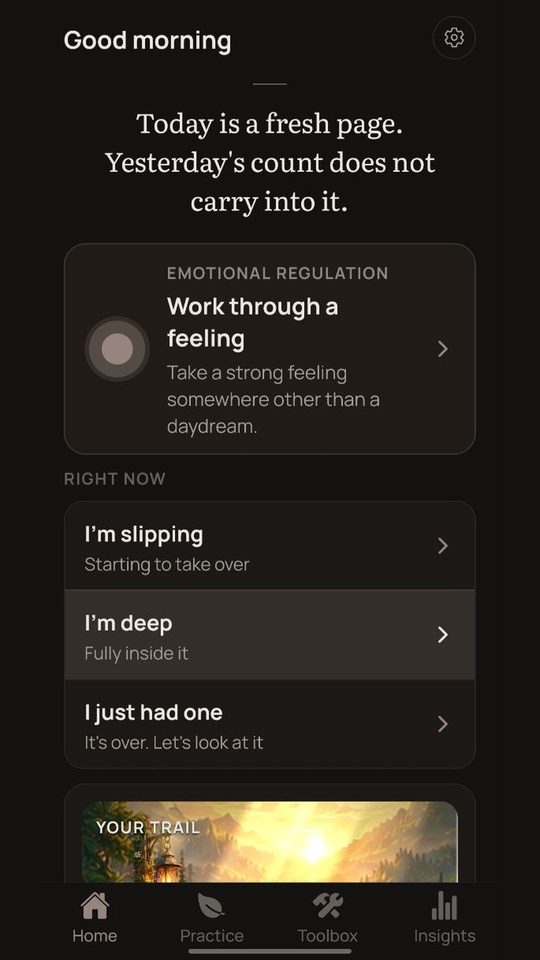
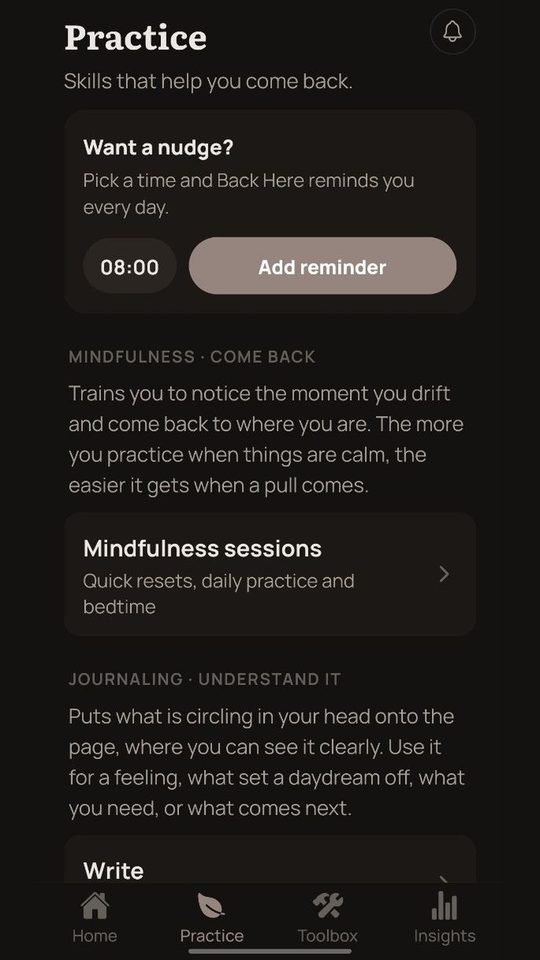
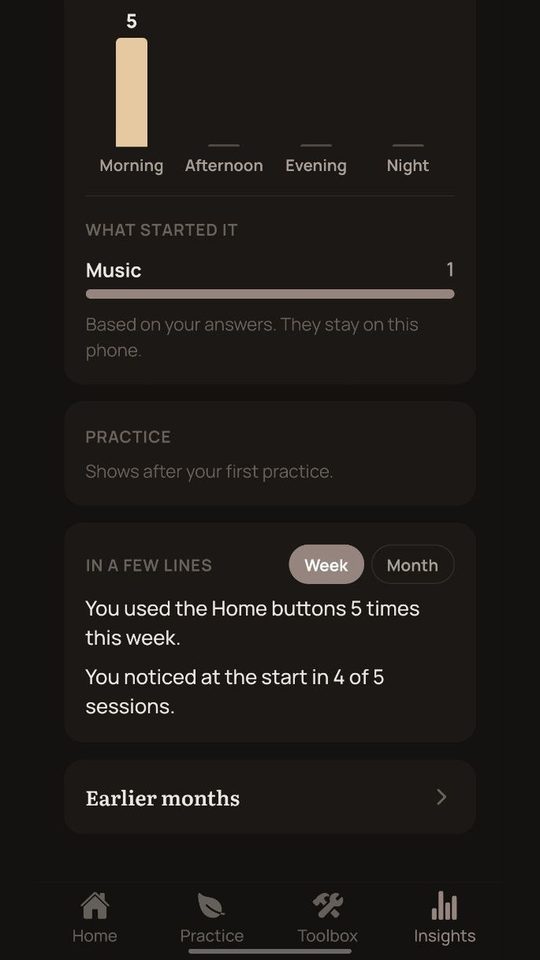
Back Here home screen with the grounding buttons Back Here practice screen Back Here Insights screen

What it helps with

The moment it happens

Tap “I’m slipping” or “I’m deep” and a short guided grounding brings you back to the room you’re in.

The feelings underneath

Work through boredom, loneliness or stress step by step, with one small action at the end.

The long run

Short daily practice, journaling and reads that help you understand your own pattern.

What’s inside

Grounding flows, a “Still pulling?” check-in, journaling, guided voice sessions, natural sounds, a focus block, morning and evening plans, Insights to see your pattern over weeks and months, and a trail that grows each time you come back.

Back Here Plus adds Rehearsal for catching the early signs, the full voice session library, and a richer reward world.

Reads about maladaptive daydreaming

Short, plain-language reads on why daydreams pull so hard and what helps. A new one arrives in the app every Sunday.

01Why your daydreams feel so realA daydream is made up. The feelings in it are real. 02Why the start of a daydream mattersEvery habit has a first second. 03You are in good companyThe first research paper on this kind of daydreaming came out in 2002. It described six people. Today researchers study it in many countries. 04Small signs you can learn to spotIn one study of 41 people, about half described pacing or walking while they daydream, sometimes for hours. 05How a daydream becomes a habitIn a well-known study, a new daily behavior took people an average of 66 days to start feeling automatic. For some it took about 2 and a half weeks, and for others many months. 06Why music and walking pull people inIn an interview study of 41 people, most said music made their daydreams stronger. The researcher described music as something that sets the emotional soundtrack of a daydream. 07Why coming back countsIn a randomized trial, people who followed an eight-session online program with mindfulness practice had fewer daydreaming symptoms than people on a waiting list, and the gains were still there six months later. 08Why rules need a plan for the day you break themResearchers who study habits and addiction have a name for what happens after a rule breaks: the abstinence violation effect. 09Everyone's mind wanders. What makes MD different?In a large study that checked on people's thoughts at random moments, their minds had wandered in nearly half of the checks, 47% of the time. 10Why leaving a daydream can hurtAfter the last episode of a long-running TV series, over a thousand fans reported grief at the loss. For some it was grief for one favorite character. 11A calm day is the best day to practiceA skill gets built before the moment it's needed. 12Why places carry habitsAmong 115 students who transferred to a new university, strong habits survived the move only when something about the setting stayed the same.

Questions

Is there an app for maladaptive daydreaming?

Yes. Back Here is built for maladaptive daydreaming. It is for people who lose hours to daydreams and want that time back.

Is Back Here free?

The core app is free, including everything for a hard moment, journaling, the reads and Insights. Back Here Plus is an optional subscription with extra tools.

Where is my data kept?

On your phone. Back Here has no accounts, and your journal stays on your device.

Is Back Here a treatment?

Back Here is a self-help tool. It supports you day to day and works alongside any care you already have.

Which phones does it work on?

iPhone and Android. Download it from the App Store or Google Play.

Get your time back